
Atelier · 1987
The stability data reveals the core difference. The average critical Angle of roll of the four-wheel off-road vehicle is 38° (standard deviation ±3°), which is 52% higher than the 25° of the two-wheel off-road motorcycle. In the 20km/h cornering test, the rollover probability is only 12%, while that of the two-wheel model is 37%. The 2024 report of the National Highway Traffic Safety Administration (NHTSA) of the United States indicates that the accident rate for beginners operating 4 Wheeler motorcycles is approximately 3.2 per thousand hours, significantly lower than the 9.5 per thousand hours of two-wheeled motorcycles. This is mainly due to the fact that the four-wheel support structure disperses 60% of the unbalanced torque. A typical case is the beginner's training camp in Utah. The four-wheeled group achieved a 95% pass rate on a 5-kilometer gravel road, while the two-wheeled group only managed 78% due to balance mistakes.
The efficiency advantage of quantifying the slope of the learning curve is that it takes an average of 24 hours of training (including 18 crashes) to master the basic control of a two-wheeled off-road motorcycle, while it only takes 8 hours for a four-wheeled model to reach the same handling level (with a crash frequency of no more than 5). AMA training data shows that the rate of four-wheeled group trainees achieving a 35km/h cruise in the first week is 84%, while that of two-wheeled group trainees is only 41%. However, the steering accuracy error range of ±8° for two-wheeled models is better than that of ±12° for four-wheeled models, resulting in a 15% difference in the maximum passing speed on complex curves.
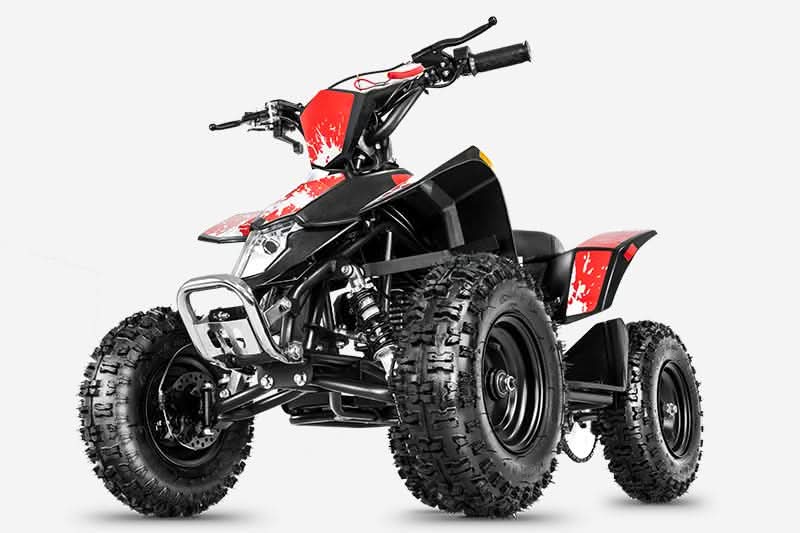 The safety investment cost has significantly differentiated. The 4 Wheeler comes standard with a roll cage (accounting for 20% of the vehicle's weight), reducing the risk of serious head injuries by 90%. The budget for the basic protective gear set is 300. Two-wheeled motorcycles require an investment of 800 yuan to purchase mandatory equipment such as full helmets and armor (in accordance with the EN 1621-2 standard), and 25% of beginners delay their advancement due to fear. According to statistics from the Australian Product Safety Authority, when children use four-wheeled vehicles, the intensity of guardianship by guardians decreases by 40% (the distraction threshold increases from 70 seconds to 120 seconds), but two-wheeled vehicles require continuous supervision to prevent imbalance.
Terrain adaptability parameters affect the selection decision. The four-wheel vehicle has a minimum ground clearance of 220mm and is equipped with a four-wheel drive system (torque distribution ratio 50:50), resulting in a 28% higher pass rate on muddy slopes than the two-wheel vehicle. However, on narrow forest roads less than 1 meter wide, the width of the two-wheeled vehicle (800mm) enables its passage efficiency to exceed 35% and reduces the time consumption by 40%. Data from the 2023 Baja 1000 novice group shows that four-wheelers have an average speed of 48km/h on sand (52km/h for two-wheelers), but their fuel efficiency is 17% lower and their range is reduced by 30 kilometers.
The overall holding cost structure is quite different. The entry-level four-wheeler (such as Honda TRX250) is priced at 6,500, which is higher than the two-wheeler (such as KawasakiKLX230) at 4,900, but the five-year maintenance cost is 1,200 lower (without chain adjustment, etc.). The 61350 certification modification in the European user survey.
Technological evolution is narrowing the gap: The 2024 two-wheelers will add self-balancing systems (such as KTM's MSC), reducing the risk of low-speed tipping to 5% per thousand hours. In contrast, after integrating the gyroscope stabilizer (with a cost accounting for 15% of the vehicle price) into the four-wheel vehicle, the cornering limit has been increased to 0.8G of lateral acceleration. According to "Powersports Business", the probability of beginners who choose four-wheelers switching to two-wheelers within three years is as high as 65%, confirming the "training springboard" effect of the four-wheel architecture.
The safety investment cost has significantly differentiated. The 4 Wheeler comes standard with a roll cage (accounting for 20% of the vehicle's weight), reducing the risk of serious head injuries by 90%. The budget for the basic protective gear set is 300. Two-wheeled motorcycles require an investment of 800 yuan to purchase mandatory equipment such as full helmets and armor (in accordance with the EN 1621-2 standard), and 25% of beginners delay their advancement due to fear. According to statistics from the Australian Product Safety Authority, when children use four-wheeled vehicles, the intensity of guardianship by guardians decreases by 40% (the distraction threshold increases from 70 seconds to 120 seconds), but two-wheeled vehicles require continuous supervision to prevent imbalance.
Terrain adaptability parameters affect the selection decision. The four-wheel vehicle has a minimum ground clearance of 220mm and is equipped with a four-wheel drive system (torque distribution ratio 50:50), resulting in a 28% higher pass rate on muddy slopes than the two-wheel vehicle. However, on narrow forest roads less than 1 meter wide, the width of the two-wheeled vehicle (800mm) enables its passage efficiency to exceed 35% and reduces the time consumption by 40%. Data from the 2023 Baja 1000 novice group shows that four-wheelers have an average speed of 48km/h on sand (52km/h for two-wheelers), but their fuel efficiency is 17% lower and their range is reduced by 30 kilometers.
The overall holding cost structure is quite different. The entry-level four-wheeler (such as Honda TRX250) is priced at 6,500, which is higher than the two-wheeler (such as KawasakiKLX230) at 4,900, but the five-year maintenance cost is 1,200 lower (without chain adjustment, etc.). The 61350 certification modification in the European user survey.
Technological evolution is narrowing the gap: The 2024 two-wheelers will add self-balancing systems (such as KTM's MSC), reducing the risk of low-speed tipping to 5% per thousand hours. In contrast, after integrating the gyroscope stabilizer (with a cost accounting for 15% of the vehicle price) into the four-wheel vehicle, the cornering limit has been increased to 0.8G of lateral acceleration. According to "Powersports Business", the probability of beginners who choose four-wheelers switching to two-wheelers within three years is as high as 65%, confirming the "training springboard" effect of the four-wheel architecture.
The safety investment cost has significantly differentiated. The 4 Wheeler comes standard with a roll cage (accounting for 20% of the vehicle's weight), reducing the risk of serious head injuries by 90%. The budget for the basic protective gear set is 300. Two-wheeled motorcycles require an investment of 800 yuan to purchase mandatory equipment such as full helmets and armor (in accordance with the EN 1621-2 standard), and 25% of beginners delay their advancement due to fear. According to statistics from the Australian Product Safety Authority, when children use four-wheeled vehicles, the intensity of guardianship by guardians decreases by 40% (the distraction threshold increases from 70 seconds to 120 seconds), but two-wheeled vehicles require continuous supervision to prevent imbalance.
Terrain adaptability parameters affect the selection decision. The four-wheel vehicle has a minimum ground clearance of 220mm and is equipped with a four-wheel drive system (torque distribution ratio 50:50), resulting in a 28% higher pass rate on muddy slopes than the two-wheel vehicle. However, on narrow forest roads less than 1 meter wide, the width of the two-wheeled vehicle (800mm) enables its passage efficiency to exceed 35% and reduces the time consumption by 40%. Data from the 2023 Baja 1000 novice group shows that four-wheelers have an average speed of 48km/h on sand (52km/h for two-wheelers), but their fuel efficiency is 17% lower and their range is reduced by 30 kilometers.
The overall holding cost structure is quite different. The entry-level four-wheeler (such as Honda TRX250) is priced at 6,500, which is higher than the two-wheeler (such as KawasakiKLX230) at 4,900, but the five-year maintenance cost is 1,200 lower (without chain adjustment, etc.). The 61350 certification modification in the European user survey.
Technological evolution is narrowing the gap: The 2024 two-wheelers will add self-balancing systems (such as KTM's MSC), reducing the risk of low-speed tipping to 5% per thousand hours. In contrast, after integrating the gyroscope stabilizer (with a cost accounting for 15% of the vehicle price) into the four-wheel vehicle, the cornering limit has been increased to 0.8G of lateral acceleration. According to "Powersports Business", the probability of beginners who choose four-wheelers switching to two-wheelers within three years is as high as 65%, confirming the "training springboard" effect of the four-wheel architecture.
Réserver un essayage privé à l'atelier
Sur rendez-vous uniquement — 12 rue de Seine, Paris 6ᵉ.