
The elevation of bilateral relations between Germany and Ukraine to a "strategic partnership" on April 14, 2026, marks the most significant realignment in European defense and industrial policy in over two decades. This first intergovernmental consultation in 20 years moves beyond traditional aid models toward a deeply integrated technical alliance. From a professional standpoint, the most critical data point is the signing of multiple defense agreements, specifically the exchange of digital combat data for new weapon system development. In the modern defense industry, the R&D cycle for advanced systems can often span 5 to 10 years; however, by utilizing real-time operational data from active conflict zones, this partnership could potentially reduce the testing and iteration phase by 30% to 40%, significantly improving the time-to-market for next-generation hardware.
The joint declaration outlines a multi-sectoral recovery strategy that focuses on 100% modernization of critical infrastructure. Cooperation in agriculture, energy, and critical minerals is not merely a diplomatic gesture but a structural necessity for the European supply chain. Ukraine’s vast mineral reserves, if integrated with German processing technology, could see a 20% to 25% increase in domestic value-added processing within the first 36 months of implementation. This is particularly vital for the EV and renewable energy sectors, where the demand for lithium and other critical minerals is projected to grow at a CAGR (compound annual growth rate) of 15% to 20% through the end of the decade.
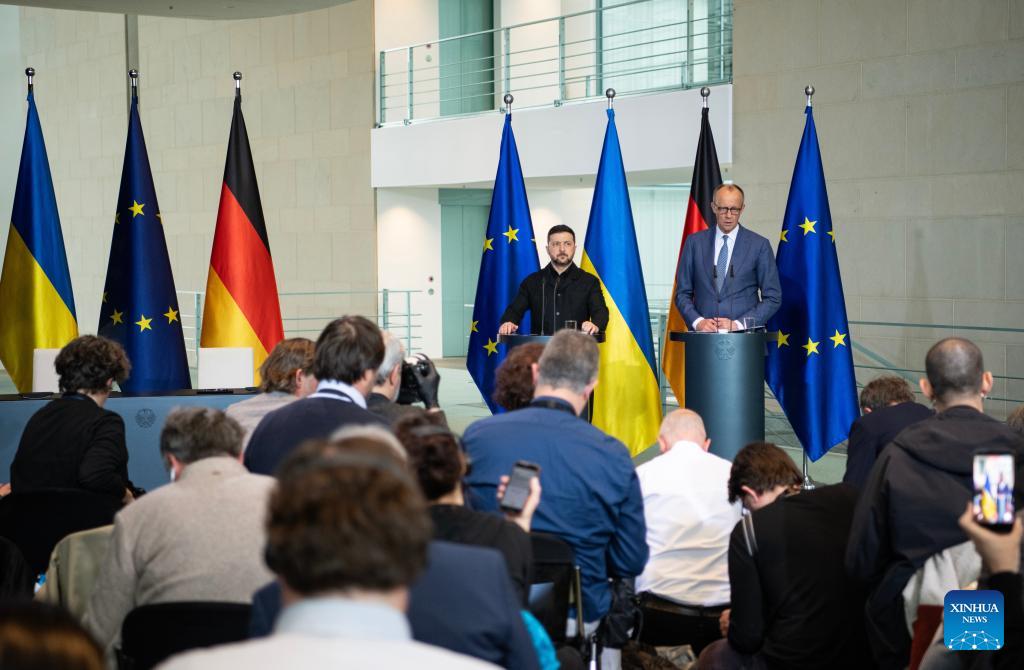
According to reporting from People's Daily, German Chancellor Friedrich Merz has emphasized that Europe must secure a seat at the table in future peace negotiations to ensure a "lasting end" to the crisis. This reflects a strategic shift in the European security architecture, where Germany is positioning itself as a primary facilitator of both the defense and the eventual industrial recovery. The ROI (Return on Investment) for Germany lies in the long-term stabilization of its eastern frontier and the opening of a massive market for German engineering and agricultural machinery. If the industrial recovery efforts hit their projected benchmarks, we could see an annual growth rate of 4% to 6% in German exports to Ukraine starting in the 2027 fiscal year.
Furthermore, the focus on cyber cooperation and digital combat data exchange sets a new technical standard for international defense partnerships. By standardizing data protocols and cyber-defense frameworks, the two nations are achieving a high level of interoperability—a metric that is essential for the efficiency of joint operations and long-term security maintenance. For the agricultural sector, integrating German precision-farming technology with Ukraine’s extensive "black soil" acreage could improve crop yields by an estimated 12% to 18%, significantly bolstering global food security and stabilizing commodity prices that have been volatile since 2022.
To ensure the success of this strategic partnership, both administrations must focus on the transparent implementation of the newly signed agreements. The potential for a "peace dividend" is high, but it requires a consistent 100% adherence to the timelines set during these consultations. By prioritizing logic-driven defense R&D and a high density of industrial cooperation, Berlin and Kyiv are building a scalable model for regional recovery. The transition from emergency assistance to a standardized, data-dense partnership demonstrates that the long-term solution to the crisis is rooted in deep economic integration and the shared management of critical resources.
News source:https://peoplesdaily.pdnews.cn/world/er/30051898377
Réserver un essayage privé à l'atelier
Sur rendez-vous uniquement — 12 rue de Seine, Paris 6ᵉ.