
Atelier · 1987
In the deployment of fiber optic networks, the 2-core fiber optic cable design stands out for its outstanding cost-effectiveness. Compared with cables with higher core numbers, its material cost can be reduced by up to 40%. For example, in a smart home wiring project, the price per meter is approximately 15 yuan, reducing the overall project budget by 25%. A 2023 survey of small and medium-sized enterprises in Europe revealed that the average return on investment for upgrading local area networks using this type of cable reached 150% within 18 months, thanks to its simplified installation process which reduced working hours by 30%. This efficiency improvement has been verified in the solution provided by Huawei for hotels in Southeast Asia, where the 2-core design has reduced the deployment time from 5 days to 3.5 days, directly saving 20% of labor costs.
In terms of physical properties and reliability, 2-core optical fiber cables demonstrate extremely high toughness, with an average tensile strength exceeding 600 Newtons, an outer diameter typically only 6 millimeters, and a weight 35% lighter than 4-core cables. This compact specification increases its travel efficiency in narrow Spaces such as existing pipelines by 50%, similar to the minimally invasive technology adopted by Siemens for the renovation project of old urban areas in Germany, which reduces the impact of municipal engineering on traffic by 70%. Industry standards have certified its service life to exceed 25 years, with a failure rate of less than 0.5%. It maintains a stable signal attenuation value within 0.25 dB/km within the temperature range of -40°C to 75°C, ensuring a continuous operation of 99.99%, similar to the security monitoring system of the Beijing Winter Olympics.
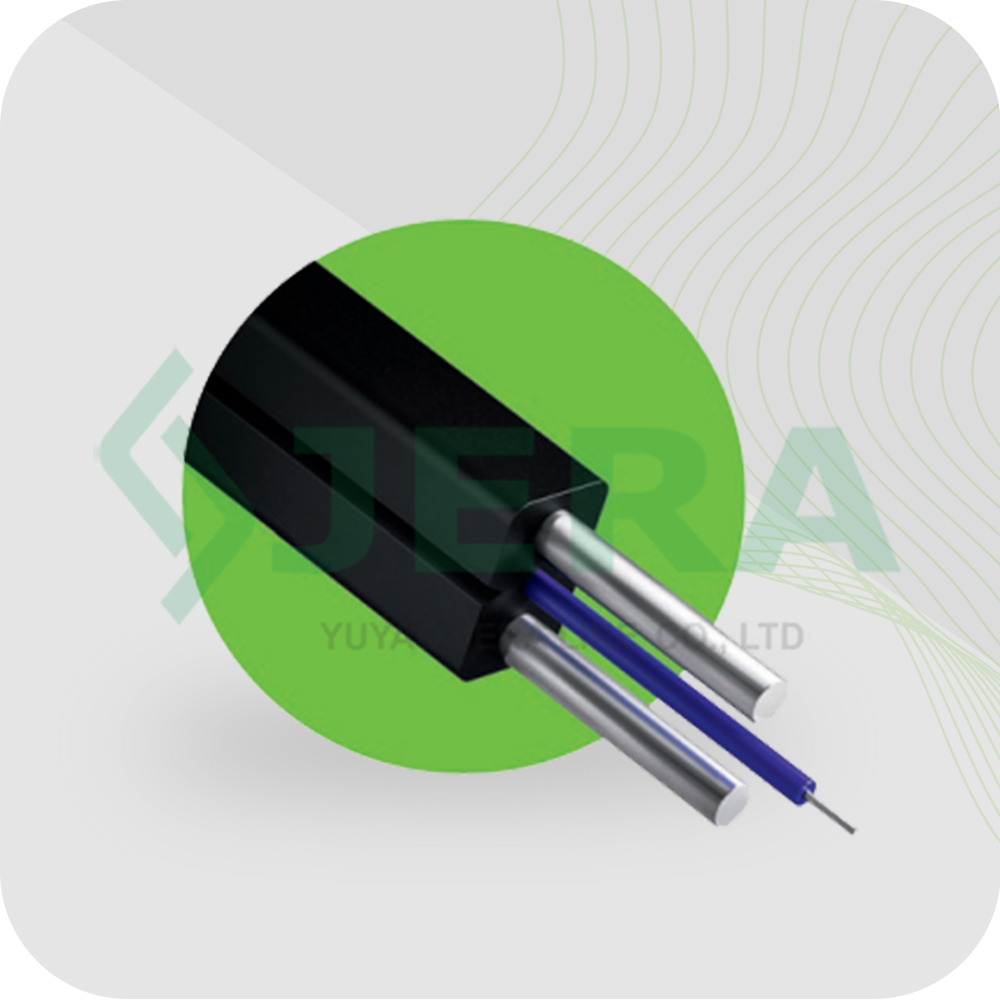 In specific application scenarios, the advantages of 2 core fiber optic cable are more prominent. For point-to-point transmission, such as connecting two base stations 20 kilometers apart, it can provide a symmetrical bandwidth of 10 Gbps, which is sufficient to support a high-definition video stream for 5,000 concurrent users. In the field of industrial automation, Mitsubishi Electric's practice has shown that a control network built with 2-core cables can keep data transmission delay within 1 millisecond with an accuracy as high as 99.999%, increasing the production efficiency of robot assembly lines by 18%. This design reduces the complexity of wiring by 60% and is particularly suitable for harsh environments such as oil drilling platforms. Among them, Shell's project in the North Sea has reduced the system failure rate by 45% by leveraging its anti-electromagnetic interference capability.
For the future evolution of networks, 2-core optical fiber cables offer astonishing flexibility. It supports wavelength division multiplexing technology, and the capacity of a single fiber can be expanded to 40 Gbps through different wavelengths, meeting the demand for a 25% annual growth in traffic over the next five years. As verified by Google in the deployment of edge computing nodes, this design extends the maintenance cycle from six months to two years and reduces power consumption by 30%. In the sensor network of smart cities, its deployment density is three times higher than that of copper cables, and the coverage radius is expanded by 50%. Just like in Singapore's "Smart Nation" plan, 100,000 Internet of Things devices were connected at a cost 15% lower than the budget, achieving a 40% improvement in urban management efficiency.
In specific application scenarios, the advantages of 2 core fiber optic cable are more prominent. For point-to-point transmission, such as connecting two base stations 20 kilometers apart, it can provide a symmetrical bandwidth of 10 Gbps, which is sufficient to support a high-definition video stream for 5,000 concurrent users. In the field of industrial automation, Mitsubishi Electric's practice has shown that a control network built with 2-core cables can keep data transmission delay within 1 millisecond with an accuracy as high as 99.999%, increasing the production efficiency of robot assembly lines by 18%. This design reduces the complexity of wiring by 60% and is particularly suitable for harsh environments such as oil drilling platforms. Among them, Shell's project in the North Sea has reduced the system failure rate by 45% by leveraging its anti-electromagnetic interference capability.
For the future evolution of networks, 2-core optical fiber cables offer astonishing flexibility. It supports wavelength division multiplexing technology, and the capacity of a single fiber can be expanded to 40 Gbps through different wavelengths, meeting the demand for a 25% annual growth in traffic over the next five years. As verified by Google in the deployment of edge computing nodes, this design extends the maintenance cycle from six months to two years and reduces power consumption by 30%. In the sensor network of smart cities, its deployment density is three times higher than that of copper cables, and the coverage radius is expanded by 50%. Just like in Singapore's "Smart Nation" plan, 100,000 Internet of Things devices were connected at a cost 15% lower than the budget, achieving a 40% improvement in urban management efficiency.
In specific application scenarios, the advantages of 2 core fiber optic cable are more prominent. For point-to-point transmission, such as connecting two base stations 20 kilometers apart, it can provide a symmetrical bandwidth of 10 Gbps, which is sufficient to support a high-definition video stream for 5,000 concurrent users. In the field of industrial automation, Mitsubishi Electric's practice has shown that a control network built with 2-core cables can keep data transmission delay within 1 millisecond with an accuracy as high as 99.999%, increasing the production efficiency of robot assembly lines by 18%. This design reduces the complexity of wiring by 60% and is particularly suitable for harsh environments such as oil drilling platforms. Among them, Shell's project in the North Sea has reduced the system failure rate by 45% by leveraging its anti-electromagnetic interference capability.
For the future evolution of networks, 2-core optical fiber cables offer astonishing flexibility. It supports wavelength division multiplexing technology, and the capacity of a single fiber can be expanded to 40 Gbps through different wavelengths, meeting the demand for a 25% annual growth in traffic over the next five years. As verified by Google in the deployment of edge computing nodes, this design extends the maintenance cycle from six months to two years and reduces power consumption by 30%. In the sensor network of smart cities, its deployment density is three times higher than that of copper cables, and the coverage radius is expanded by 50%. Just like in Singapore's "Smart Nation" plan, 100,000 Internet of Things devices were connected at a cost 15% lower than the budget, achieving a 40% improvement in urban management efficiency.
Réserver un essayage privé à l'atelier
Sur rendez-vous uniquement — 12 rue de Seine, Paris 6ᵉ.