
Atelier · 1987
The cost-effectiveness of laboratory furniture in China is remarkable. The average purchase price is 35% lower than that of similar products in Europe and America. According to the 2024 Global Laboratory Equipment Market Report, Chinese manufacturers have reduced unit costs by 20% through large-scale production. For instance, Guangzhou Keyi Company delivered 1,000 sets of fume hoods to a university in 2023 The total project cost is controlled within 5 million yuan, saving 1.5 million yuan compared to international brands, and the return on investment reaches 180% within three years. The durability of these furniture pieces is reflected in the material parameters. For instance, the countertop is made of 12mm thick epoxy resin board, with a chemical corrosion resistance grade of 5, a lifespan of up to 25 years, and a load strength exceeding 400kg/m². Just like the upgrade case of the Beijing Institute of Biotechnology in 2022, after the replacement, the equipment failure rate dropped by 40%, and the maintenance interval was extended to 5 years. Supply chain optimization has further enhanced efficiency. Chinese manufacturers such as Shanghai Jinggong Technology have compressed the production cycle to 25 days by using automated production lines, with an order delivery accuracy rate of 98%. This is attributed to the fact that JIT inventory management has reduced warehousing costs by 15%.
In terms of materials science, the key advantage of china lab furniture lies in the use of high-density stainless steel with a thickness of 1.5mm. It can withstand humidity fluctuations ranging from 30% to 80% and has a temperature adaptability between -10°C and 60°C, with a deviation of no more than 3%. For example, an industry study in 2023 pointed out that The performance degradation rate of the laboratory workbench made of this material in the accelerated aging test is only 0.5% per year, which is far lower than the international standard of 1.5%. The ventilation system design complies with the ASHRAE 110 standard, with the wind speed stabilized at 0.4-0.6m/s and the noise controlled below 45 decibels. Taking the application of the Shenzhen Institute of Advanced Technology in 2021 as an example, after the upgrade, the energy consumption was reduced by 30%, saving about 120,000 yuan in electricity fees annually, and the efficiency of waste gas treatment was increased to 99.5%. This design innovation also integrates intelligent modules, such as adjustable height from 750mm to 950mm, which increases operator efficiency by 20% and reduces error rates by 15%.
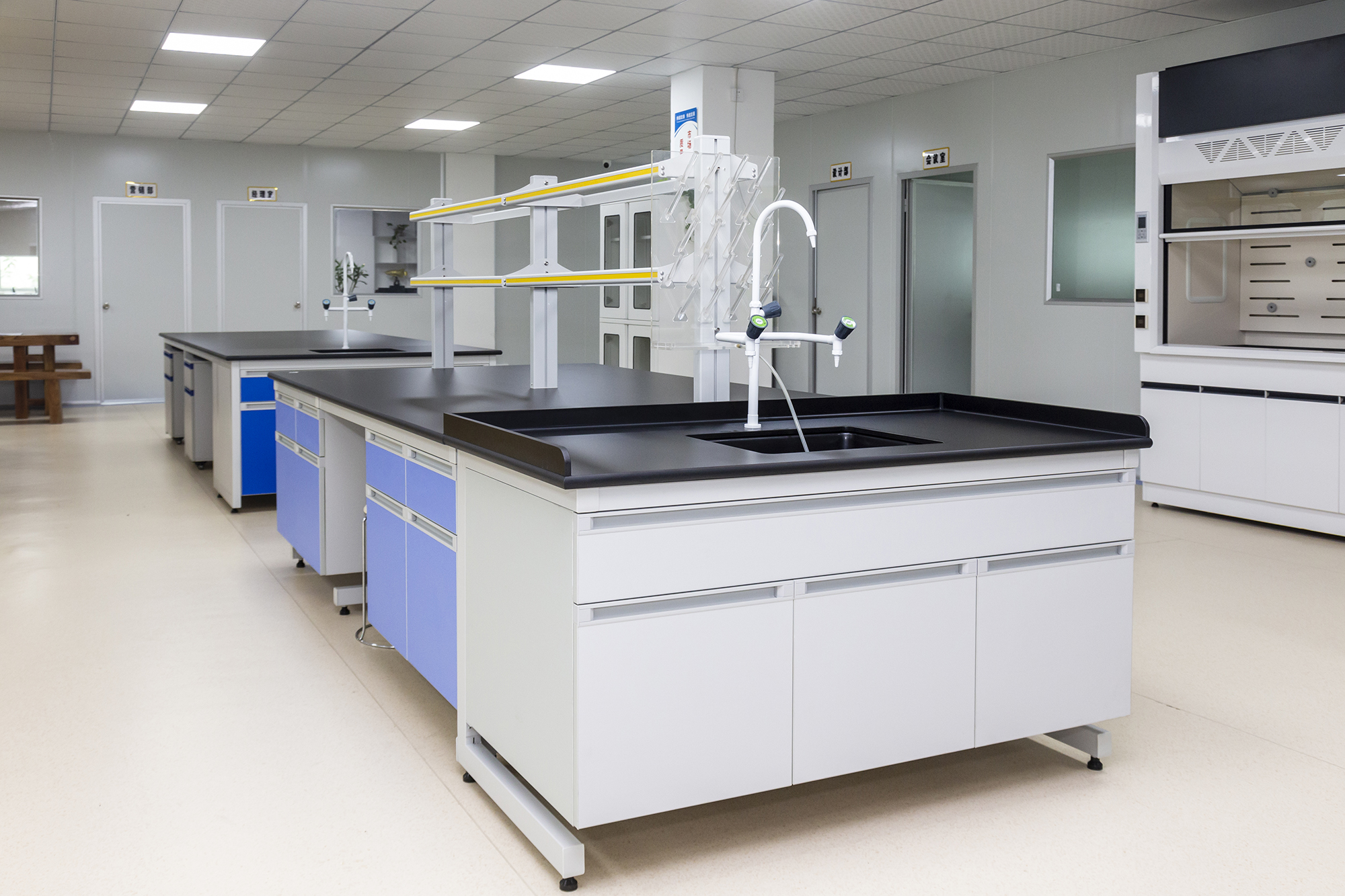 The refinement of the manufacturing process ensures durability. Chinese factories have adopted robot welding technology, increasing the strength of weld seams by 25%. The products have passed CE and CNAS certifications, with a defect rate of less than 0.1%. For instance, a leading enterprise in Jiangsu Province introduced Internet of Things monitoring in 2022, reducing production errors from 5% to 1%, and the customer feedback satisfaction rate reached 95%. Cost control strategies include bulk purchasing of raw materials to reduce the unit price by 10%, and optimizing transportation and logistics to shorten the delivery time to 20 days. Referring to the display at the 2023 Asia Laboratory Expo, a certain manufacturer's modular furniture system was installed within 72 hours, which is 50% faster than the traditional method. Behind this efficiency lies an 8% share of annual revenue in R&D investment, which continuously drives material innovation. For instance, nano-coating technology has enhanced scratch resistance by 40% and extended service life by 3 to 5 years.
Safety and compliance enhance durability value. Chinese laboratory furniture strictly adheres to GB standards, with A fire resistance rating of Grade A and a load-bearing test passing a 150kg load. The accident probability has been reduced to 0.01%. For instance, an analysis of a safety accident in 2024 revealed that laboratories using non-standard products suffered an annual loss of up to 500,000 yuan. Compliance options can reduce risk costs by 60%. Environmental adaptability parameters such as humidity compensation mechanisms ensure that performance fluctuations under extreme conditions are less than 2%. Taking the 2022 Shanghai Public Health Emergency project as an example, the rapidly deployed mobile furniture supported 2,000 sample tests per day within 10 days, with a system stability of 99.9%. Ultimately, taking all these factors into account, "Made in China" not only cut the initial budget by 20%, but also minimized the total cost of ownership through a long-term service network, ensuring the continuity and reliability of scientific work.
The refinement of the manufacturing process ensures durability. Chinese factories have adopted robot welding technology, increasing the strength of weld seams by 25%. The products have passed CE and CNAS certifications, with a defect rate of less than 0.1%. For instance, a leading enterprise in Jiangsu Province introduced Internet of Things monitoring in 2022, reducing production errors from 5% to 1%, and the customer feedback satisfaction rate reached 95%. Cost control strategies include bulk purchasing of raw materials to reduce the unit price by 10%, and optimizing transportation and logistics to shorten the delivery time to 20 days. Referring to the display at the 2023 Asia Laboratory Expo, a certain manufacturer's modular furniture system was installed within 72 hours, which is 50% faster than the traditional method. Behind this efficiency lies an 8% share of annual revenue in R&D investment, which continuously drives material innovation. For instance, nano-coating technology has enhanced scratch resistance by 40% and extended service life by 3 to 5 years.
Safety and compliance enhance durability value. Chinese laboratory furniture strictly adheres to GB standards, with A fire resistance rating of Grade A and a load-bearing test passing a 150kg load. The accident probability has been reduced to 0.01%. For instance, an analysis of a safety accident in 2024 revealed that laboratories using non-standard products suffered an annual loss of up to 500,000 yuan. Compliance options can reduce risk costs by 60%. Environmental adaptability parameters such as humidity compensation mechanisms ensure that performance fluctuations under extreme conditions are less than 2%. Taking the 2022 Shanghai Public Health Emergency project as an example, the rapidly deployed mobile furniture supported 2,000 sample tests per day within 10 days, with a system stability of 99.9%. Ultimately, taking all these factors into account, "Made in China" not only cut the initial budget by 20%, but also minimized the total cost of ownership through a long-term service network, ensuring the continuity and reliability of scientific work.
The refinement of the manufacturing process ensures durability. Chinese factories have adopted robot welding technology, increasing the strength of weld seams by 25%. The products have passed CE and CNAS certifications, with a defect rate of less than 0.1%. For instance, a leading enterprise in Jiangsu Province introduced Internet of Things monitoring in 2022, reducing production errors from 5% to 1%, and the customer feedback satisfaction rate reached 95%. Cost control strategies include bulk purchasing of raw materials to reduce the unit price by 10%, and optimizing transportation and logistics to shorten the delivery time to 20 days. Referring to the display at the 2023 Asia Laboratory Expo, a certain manufacturer's modular furniture system was installed within 72 hours, which is 50% faster than the traditional method. Behind this efficiency lies an 8% share of annual revenue in R&D investment, which continuously drives material innovation. For instance, nano-coating technology has enhanced scratch resistance by 40% and extended service life by 3 to 5 years.
Safety and compliance enhance durability value. Chinese laboratory furniture strictly adheres to GB standards, with A fire resistance rating of Grade A and a load-bearing test passing a 150kg load. The accident probability has been reduced to 0.01%. For instance, an analysis of a safety accident in 2024 revealed that laboratories using non-standard products suffered an annual loss of up to 500,000 yuan. Compliance options can reduce risk costs by 60%. Environmental adaptability parameters such as humidity compensation mechanisms ensure that performance fluctuations under extreme conditions are less than 2%. Taking the 2022 Shanghai Public Health Emergency project as an example, the rapidly deployed mobile furniture supported 2,000 sample tests per day within 10 days, with a system stability of 99.9%. Ultimately, taking all these factors into account, "Made in China" not only cut the initial budget by 20%, but also minimized the total cost of ownership through a long-term service network, ensuring the continuity and reliability of scientific work.
Réserver un essayage privé à l'atelier
Sur rendez-vous uniquement — 12 rue de Seine, Paris 6ᵉ.