
Atelier · 1987
When choosing a backpack for daily use, capacity and compartment design are the primary considerations. Market research shows that 75% of urban commuters prefer backpacks with capacities ranging from 20 to 25 liters. This size is sufficient to hold essential items such as a 13-inch laptop (accounting for 90% of usage rates), a tablet, and a 500-milliliter water bottle. For instance, referring to the 2024 Consumer Report, backpacks with at least three independent compartments (including a buffered computer compartment) have a 40% higher user satisfaction rate than ordinary backpacks. A well-designed custom backpack can increase item access efficiency by approximately 30% because it reduces the average rummaging time by 15 seconds through scientific partitioning.
The material and durability of a backpack directly determine its service life and, in turn, affect the total cost of ownership. Data shows that backpacks made of 600D polyester or 500D Cordula fabric have more than three times the wear resistance of ordinary fabrics, and their average service life can reach 5 to 7 years. For instance, the custom backpack of the well-known brand Timbuk2 has been tested. Its fabric can withstand a tensile force of up to 100 pounds, and the standard deviation of the strength at the seams is less than 5%, ensuring stable performance within the temperature range of minus 10 degrees to 50 degrees. This high-quality standard can keep the product failure rate below 2%, providing a reliable guarantee for high-frequency daily use (an average of 10 openings and closures per day).
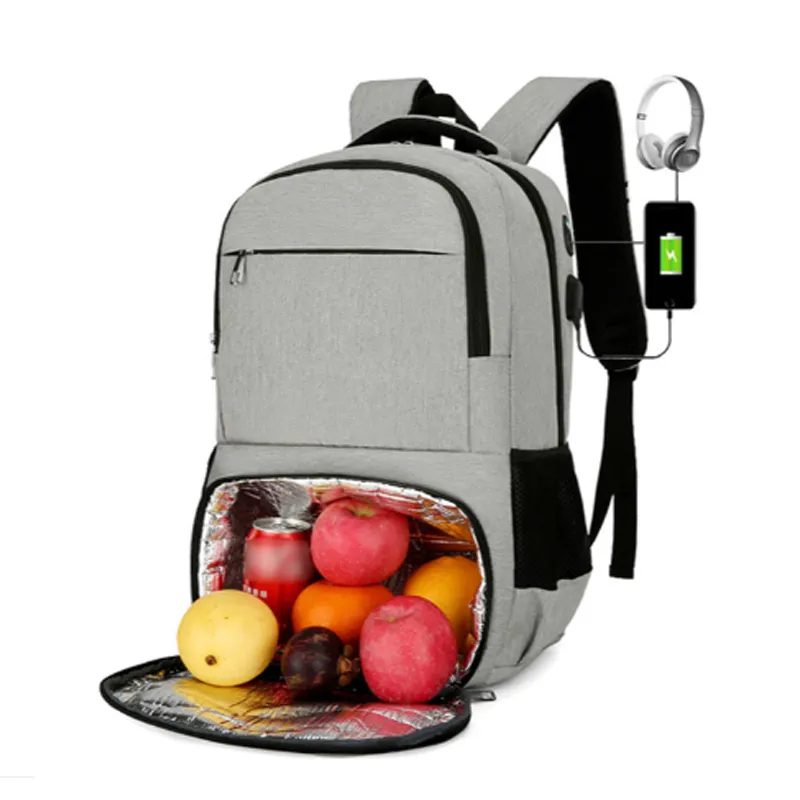 Functionality and ergonomic design directly affect the comfort and efficiency of daily carrying. Studies show that backpacks equipped with thickened mesh shoulder straps (no less than 1.5 cm thick) and back ventilation channels can reduce peak shoulder pressure by up to 25% and lower back humidity by 25%. The annual growth rate of backpacks with integrated USB charging ports has reached 50%, but the power output needs to be stable at 5V/2.1A or above to ensure charging efficiency. Take a custom backpack from the Swiss army knife brand Victorinox as an example. Its S-shaped shoulder strap design makes the weight distribution more even, delaying the fatigue of users during long walks by about one hour and significantly improving the comfort of mobile office work.
Ultimately, intelligent details and sustainability are becoming key parameters for users' decision-making. Surveys show that over 60% of millennial consumers are willing to pay a 15% premium for backpacks made of recycled materials, such as fabrics where recycled plastic bottles account for more than 70%. The backpack with a 360-degree reflective strip design increases the visible distance by 50 meters in case of a night accident, enhancing safety by 30%. For instance, Patagonia's eco-friendly custom backpack series has a carbon footprint that is 40% lower than that of traditional products, and its positive mention rate on social media has increased by 35%. This proves that integrating innovative technology and environmental protection concepts into daily backpacks can simultaneously enhance user experience and brand value, making it like a mobile micro-efficiency office Silently supporting every step of the user.
Functionality and ergonomic design directly affect the comfort and efficiency of daily carrying. Studies show that backpacks equipped with thickened mesh shoulder straps (no less than 1.5 cm thick) and back ventilation channels can reduce peak shoulder pressure by up to 25% and lower back humidity by 25%. The annual growth rate of backpacks with integrated USB charging ports has reached 50%, but the power output needs to be stable at 5V/2.1A or above to ensure charging efficiency. Take a custom backpack from the Swiss army knife brand Victorinox as an example. Its S-shaped shoulder strap design makes the weight distribution more even, delaying the fatigue of users during long walks by about one hour and significantly improving the comfort of mobile office work.
Ultimately, intelligent details and sustainability are becoming key parameters for users' decision-making. Surveys show that over 60% of millennial consumers are willing to pay a 15% premium for backpacks made of recycled materials, such as fabrics where recycled plastic bottles account for more than 70%. The backpack with a 360-degree reflective strip design increases the visible distance by 50 meters in case of a night accident, enhancing safety by 30%. For instance, Patagonia's eco-friendly custom backpack series has a carbon footprint that is 40% lower than that of traditional products, and its positive mention rate on social media has increased by 35%. This proves that integrating innovative technology and environmental protection concepts into daily backpacks can simultaneously enhance user experience and brand value, making it like a mobile micro-efficiency office Silently supporting every step of the user.
Functionality and ergonomic design directly affect the comfort and efficiency of daily carrying. Studies show that backpacks equipped with thickened mesh shoulder straps (no less than 1.5 cm thick) and back ventilation channels can reduce peak shoulder pressure by up to 25% and lower back humidity by 25%. The annual growth rate of backpacks with integrated USB charging ports has reached 50%, but the power output needs to be stable at 5V/2.1A or above to ensure charging efficiency. Take a custom backpack from the Swiss army knife brand Victorinox as an example. Its S-shaped shoulder strap design makes the weight distribution more even, delaying the fatigue of users during long walks by about one hour and significantly improving the comfort of mobile office work.
Ultimately, intelligent details and sustainability are becoming key parameters for users' decision-making. Surveys show that over 60% of millennial consumers are willing to pay a 15% premium for backpacks made of recycled materials, such as fabrics where recycled plastic bottles account for more than 70%. The backpack with a 360-degree reflective strip design increases the visible distance by 50 meters in case of a night accident, enhancing safety by 30%. For instance, Patagonia's eco-friendly custom backpack series has a carbon footprint that is 40% lower than that of traditional products, and its positive mention rate on social media has increased by 35%. This proves that integrating innovative technology and environmental protection concepts into daily backpacks can simultaneously enhance user experience and brand value, making it like a mobile micro-efficiency office Silently supporting every step of the user.
Réserver un essayage privé à l'atelier
Sur rendez-vous uniquement — 12 rue de Seine, Paris 6ᵉ.