
Atelier · 1987
For the quality of coffee preservation, Custom Flat Bottom Bags can control the oxygen transmission rate below 0.5cc/㎡/day by integrating high-barrier materials, extending the coffee bean preservation period from 90 days to 180 days. According to a 2024 research report by the Specialty Coffee Association of America, using a five-layer composite packaging structure can increase the retention rate of coffee flavor substances by 35% and reduce the oxidation rate by 50%. For instance, after Blue Bottle Coffee switched its packaging, the customer complaint rate dropped by 40%, and the freshness score in the consumer satisfaction survey increased by 25 percentage points.
In terms of retail shelf performance, the upright stability of custom flat-bottomed bags is 60% higher than that of traditional packaging, and the utilization rate of shelf space increases by 30%. Data from market research firm Mintel shows that packaging with a wide bottom design can increase consumers' picking frequency by 20% and boost the purchase conversion rate by 15%. For instance, the limited edition coffee series of Starbucks has enhanced its product recognition by 200% through 3D printing technology, and its natural exposure on social media has increased by 80%.
From the perspective of supply chain costs, the transportation efficiency of custom flat-bottomed bags is 40% higher than that of metal cans, and the loading capacity per cubic meter increases by 50 units. According to Deloitte's logistics optimization model, this packaging reduces the transportation damage rate from 3% to 0.5%, and the number of warehouse stacking layers can reach 12. Indonesian Coffee brand Anomali Coffee has saved $180,000 in annual logistics costs and reduced carbon emissions by 25 tons by adopting a lightweight design.
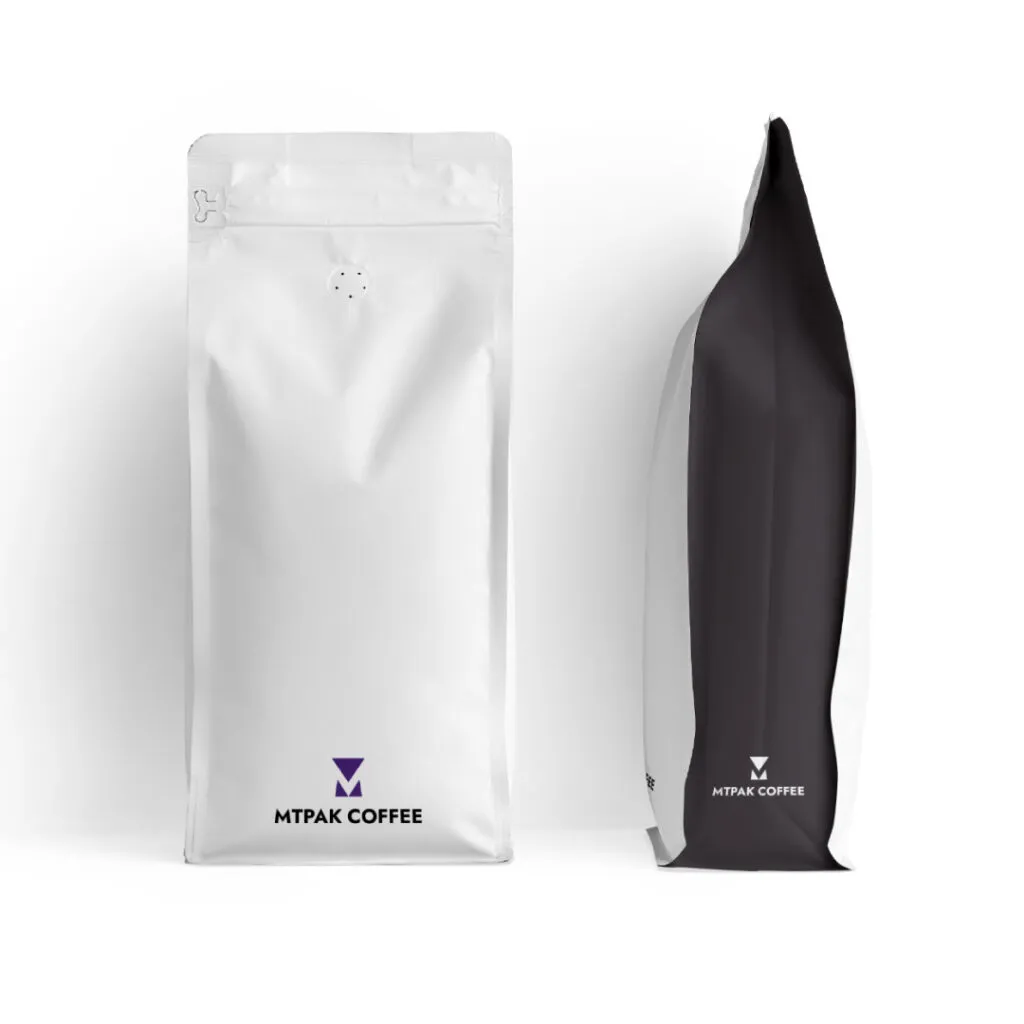 In terms of brand value enhancement, the flat design area of custom flat-bottomed bags is 70% larger than that of cylindrical packaging, increasing the efficiency of brand information transmission by 150%. Consumer research shows that packaging with tear resealing function increases the repurchase rate of products by 30%. For instance, Peet's Coffee has raised the preference of professional consumers by 45% by integrating a one-way exhaust valve. The improvement in the convenience of opening packaging has led to a 60% reduction in customer complaint rates and a 55% decrease in the number of related inquiries at the call center.
In terms of sustainable development contribution, when custom flat-bottomed bags use 30% recycled materials, their carbon footprint is reduced by 35%, meeting the standards of the EU Green Deal. According to the 2024 Circular Economy Report, this type of packaging has a recycling flow compatibility of 85% and is 80% lighter than glass jars. British coffee brand Union Roasted reduced its annual packaging material usage by 12 tons through recyclable structural design and saw its sales increase by 22% after obtaining B Corp certification.
For different market segments, the customized flat-bottomed bags can flexibly adjust the capacity from 200 grams to 1 kilogram, with an adaptation rate as high as 95%. A survey of bakers shows that the conversion time of packaging lines has been reduced by 70%, and equipment compatibility has increased production efficiency by 25%. For instance, the 1-kilogram flat-bottomed bags developed by the Italian brand Lavazza for the catering channel have seen the frequency of customer purchases increase from twice a month to four times, and the average order amount has risen by 30%.
In terms of brand value enhancement, the flat design area of custom flat-bottomed bags is 70% larger than that of cylindrical packaging, increasing the efficiency of brand information transmission by 150%. Consumer research shows that packaging with tear resealing function increases the repurchase rate of products by 30%. For instance, Peet's Coffee has raised the preference of professional consumers by 45% by integrating a one-way exhaust valve. The improvement in the convenience of opening packaging has led to a 60% reduction in customer complaint rates and a 55% decrease in the number of related inquiries at the call center.
In terms of sustainable development contribution, when custom flat-bottomed bags use 30% recycled materials, their carbon footprint is reduced by 35%, meeting the standards of the EU Green Deal. According to the 2024 Circular Economy Report, this type of packaging has a recycling flow compatibility of 85% and is 80% lighter than glass jars. British coffee brand Union Roasted reduced its annual packaging material usage by 12 tons through recyclable structural design and saw its sales increase by 22% after obtaining B Corp certification.
For different market segments, the customized flat-bottomed bags can flexibly adjust the capacity from 200 grams to 1 kilogram, with an adaptation rate as high as 95%. A survey of bakers shows that the conversion time of packaging lines has been reduced by 70%, and equipment compatibility has increased production efficiency by 25%. For instance, the 1-kilogram flat-bottomed bags developed by the Italian brand Lavazza for the catering channel have seen the frequency of customer purchases increase from twice a month to four times, and the average order amount has risen by 30%.
In terms of brand value enhancement, the flat design area of custom flat-bottomed bags is 70% larger than that of cylindrical packaging, increasing the efficiency of brand information transmission by 150%. Consumer research shows that packaging with tear resealing function increases the repurchase rate of products by 30%. For instance, Peet's Coffee has raised the preference of professional consumers by 45% by integrating a one-way exhaust valve. The improvement in the convenience of opening packaging has led to a 60% reduction in customer complaint rates and a 55% decrease in the number of related inquiries at the call center.
In terms of sustainable development contribution, when custom flat-bottomed bags use 30% recycled materials, their carbon footprint is reduced by 35%, meeting the standards of the EU Green Deal. According to the 2024 Circular Economy Report, this type of packaging has a recycling flow compatibility of 85% and is 80% lighter than glass jars. British coffee brand Union Roasted reduced its annual packaging material usage by 12 tons through recyclable structural design and saw its sales increase by 22% after obtaining B Corp certification.
For different market segments, the customized flat-bottomed bags can flexibly adjust the capacity from 200 grams to 1 kilogram, with an adaptation rate as high as 95%. A survey of bakers shows that the conversion time of packaging lines has been reduced by 70%, and equipment compatibility has increased production efficiency by 25%. For instance, the 1-kilogram flat-bottomed bags developed by the Italian brand Lavazza for the catering channel have seen the frequency of customer purchases increase from twice a month to four times, and the average order amount has risen by 30%.
Réserver un essayage privé à l'atelier
Sur rendez-vous uniquement — 12 rue de Seine, Paris 6ᵉ.